Reimagining Trade Pathways: the China Europe Railway Express
In less than a decade, the China Railway Express has made countless voyages across continents. Starting operations in 2011 and has turned into a major disruptor in international cargo shipping. This route links Asian production hubs to European consumers in record time. As a component of the Belt and Road initiative, ensuring stable delivery schedules and dependable transit.
This China to Europe rail service delivers a streamlined option for international trade. It allows firms to respond to increasing customer needs. This is a significant advantage in today’s fast-paced world.
Many logistics providers use rail systems to gain speed and reduce expenses. The China to Europe freight train is a unique solution for long-haul logistics. It is central to China’s push to grow its trade pathways. It opens up new opportunities for reliable distribution across multiple countries.
- These trains shorten delivery times from Asian hubs to European markets
- Reliable freight routes help firms plan balanced inventories
- Belt and Road objectives deepen cross-border commercial relationships
- Cross-border logistics gain speed and cost advantages
- Companies leverage a streamlined route for high-volume exports and imports
Overview of the Growing Global Trade Network
As globalization intensifies, states and enterprises search for trustworthy transport corridors spanning great distances. The China–Europe Express rail service forms a crucial element of the Belt and Road initiative. It connects Asia to Western economies, enabling industries to find quicker routes and cut emissions.
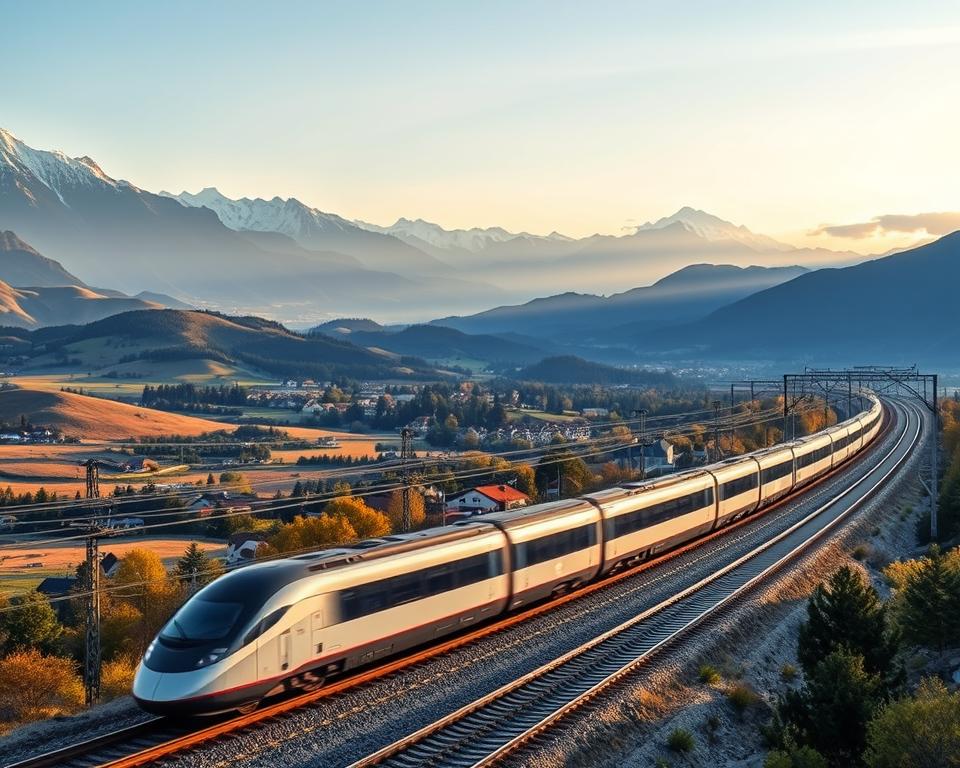
The Role of China in Cross-Border Connectivity
China is pouring substantial investment into rail systems, tightening its connections with global markets. The China–Europe Railway Express has already completed more than 100,000 journeys, carrying over 11 million TEUs representing more than $420 billion in goods. This achievement creates new trade paths, boosting competitive shipping and sustainable growth.
Benefits for Western Markets
Firms across Western economies reap rewards from this expanding trade network. They experience reduced transit durations, more stable supply chains, and a smaller environmental footprint. The network becomes a wise solution for businesses planning to reach additional territories.
Background and Goals of the Belt and Road Initiative
The Belt and Road Initiative videos Initiative is designed to open fresh trade corridors across Asia, Europe, and beyond. It aims to cut shipping costs and open up new markets for producers and distributors. This plan integrates road, maritime, and rail networks, driving infrastructure growth and fostering international cooperation.
The China railway express stands out as a key component of efficient freight transport. Its priorities include funding advanced rail technology, upgrading customs procedures, and building strategic corridors. This supports stronger ties between Eastern manufacturing hubs and Western import markets. It further results in smoother shipping operations and stimulates local economies with fresh business prospects.
China Europe Railway Express: Transforming Transcontinental Logistics
The rise of specialized freight corridors has opened new horizons for worldwide commerce. Firms increasingly seek accelerated shipments and improved intercontinental links. This program reduces uncertain transit delays, transforming the flow of goods between Asia and Europe.
Closing the Distance for Chinese Companies
Chinese manufacturers secure an advantage by accessing key European destinations. Links such as Chongqing to Duisburg illustrate that goods like electronics and vehicle parts reach Europe in roughly half the time compared with sea routes. With fixed timetables, businesses can better plan their shipments, staying competitive in demanding markets.
Boosting Efficiency in Cross-Border Logistics
More efficient customs operations and set timetables smooth out extended freight journeys. The shift results in shorter lead times and steadier logistics networks for businesses. Shippers gain from easier coordination via groupage services and intermodal links. The China railway express to Europe emerges as a key asset, linking production centers with distribution hubs for swift commerce.
Unraveling the China to Europe Freight Train Advantages
For firms needing speedier transport, the China to Europe rail service offers a strong alternative. It spans the middle ground between lengthy sea transport and premium air cargo. The Belt and Road initiative is driving growth in trade corridors, enabling the fast transport of goods like electronics, vehicles, and raw materials to Europe.
By rail, transit times of roughly 12–18 days offer a much quicker option than ocean routes. Such speed appeals to businesses that prioritize rapid delivery to satisfy customer expectations. It supports consistent growth for manufacturers who want stable cross-border supply chains.
Shorter Transit Times
Shorter journeys mean quicker order fulfillment. This benefit is valuable for both small and large businesses, helping them reduce inventory replenishment wait times.
Cost-Effective Freight Forwarding Solutions
Shipping by train is about one-fifth the cost of air freight. It is regarded as a budget-conscious method that still safeguards product quality. Under the Belt and Road initiative, stronger partnerships and improved infrastructure are simplifying cross-continental commerce.
Strategic Importance of the China–Europe Railway Express
The China Europe Express train is a cornerstone of the China Belt and Road initiative. It connects Asian producers with European importers, becoming essential for large shipments. With more than 50,000 product categories moving through 25 countries, it remains a dependable option for distributors.
For major companies, it offers a faster, eco-friendly alternative to traditional sea or air transport. It stabilizes logistics networks, supporting more accurate stock control and serving expanding customer bases. It has become an important pillar in international freight transport, easing pressure on overloaded corridors.
- Time-critical deliveries that keep retail shelves stocked
- Decreased environmental impact that underpins greener growth
- Better inventory management for a wide range of sectors
European firms increasingly identify fresh opportunities thanks to this rail service. Predictable routes and steady capacity unlock additional markets. This partnership strengthens trade while protecting logistics from global disruptions.
Eurasian Rail Corridors and Cross-Border Growth
The China Belt and Road initiative opens new avenues by linking production sites with booming markets. The broad system encompasses seaports, roadways, and inland hubs. It delivers alternative paths that reduce journey lengths and stimulate commerce. The resulting synergy enhances rail logistics and pushes firms to explore faster cargo choices.
Important corridors including Xi’an to Hamburg and Chengdu to Lodz widen international reach for items such as electronics, garments, and industrial machinery. Shipments pass through coordinated networks that blend truck, barge, and train transport. This strategy lowers overall transport costs and supports greener logistics.
Major Intermodal Logistics Hubs
Locations such as Xi’an in China and Hamburg in Germany operate as central nodes for varied cargo. They enable faster distribution, use digital tracking tools, and alleviate bottlenecks.
| Hub | Location | Key Commodities | Connectivity Advantage |
|---|---|---|---|
| Xi’an | China | Electronics, Apparel | Robust East-West Links |
| Hamburg | Germany | Machinery, Automotive Parts | Port Integration |
| Chengdu | China | Textiles, Consumer Goods | Rail-Road Collaboration |
| Lodz | Poland | Various Industrial Products | Strategic EU Entry Point |
Effects on European Supply Chains
Industrial firms enjoy cost reductions and shorter lead times, helping them distribute widely throughout Europe. This momentum in rail logistics aligns with greener strategies. It also opens up viable pathways for ongoing trade growth.
How Rail Logistics Strengthens International Trade
The China–Europe Express train, an important element of the Belt and Road initiative, is reshaping freight choices. It establishes cross-border connectivity, ensuring goods move smoothly between major markets. High cargo capacity trains create a steady flow, supporting continuous shipments and meeting growing consumer demands.
Modern electronic document submission makes customs clearance easier in numerous countries. This streamlines customs processes, providing businesses with a smoother experience and quicker turnaround times. Live tracking systems increase visibility, allowing cargo owners to follow each key movement.
- Quicker border clearance with secure documentation
- Reliable schedules that make inventory management more predictable
- Streamlined transport solutions that attract technology-driven industries
These developments strengthen cross-border links, contain costs, and help meet strict deadlines. Accessing global markets has become easier without sacrificing quality or reliability. Rail freight has become a game-changing tool for global trade, serving diverse sectors and consumer demands.
Challenges and Future Prospects in Global Trade Connectivity
Trade corridors are expanding through rail connections, linking distant markets. The China–Europe Express rail service, as a component of the China Belt and Road initiative, is redefining global cargo flows. Border checkpoints along eurasian rail routes need better coordination to reduce delays and meet rising demand.
Building Infrastructure for Sustainable Expansion
Different rail gauges necessitate transshipment at ports like Alashankou, impacting transit times. These transfers require upgraded facilities and advanced tracking to ensure timely operations. Using the 95306 freight platform enhances transparency and assists in relieving congestion during cargo handoffs.
On-time infrastructure projects and upgraded corridors ignite new chances for quicker, greener logistics.
Deepening Cooperation with Belt and Road Enterprises from China
International agreements foster trust between shippers and participating countries. Collaborative work targets predictable customs frameworks and modern tools to make long-distance logistics smoother. Close alliances with Belt and Road Chinese Enterprises support improved service standards and create more unified freight experiences along Eurasian routes.
This depth of cooperation lays the groundwork for steady progress and long-term trade advantages.
| Common Transport Hurdles | Potential Solutions |
|---|---|
| Varying Rail Gauges | Upgraded Transshipment Points |
| Time Delays at Borders | Digital Freight Platforms |
| Limited Cross-Border Coordination | Unified Customs Agreements |
How Transcontinental Railway Service Shapes Modern Commerce
In the modern interconnected economy, transcontinental rail corridors are crucial for companies that require dependable logistics. The China–Europe Express rail service belongs to the broader China Belt and Road initiative. It supports efficient cargo movement across many nations. Michael Schumann of the German Federal Association for Economic Development and Foreign Trade describes it as a vital artery of global supply chains. It enhances reliability and resilience across global trade networks, even when disruptions occur. Trade associations in Europe acknowledge its stable operation, despite congestion at seaports.
Expanding and Diversifying Supply Chains
Logistics planners gain from a more balanced portfolio of freight modes. Such diversification limits exposure to one dominant mode of transport. It creates additional ways for firms to service an even broader trade ecosystem. Costs, speed, and cargo safety give companies an edge in changing markets.
Managing Regulatory Requirements
Regulatory customs requirements and packaging standards can slow or halt shipments. Well-defined rules and aligned processes streamline moves across borders. Businesses gain confidence by working with rail operators who streamline compliance. This promotes steady growth in various industries.
| Advantage | Outcome |
|---|---|
| Reliable Schedules | Predictable transit times boost customer satisfaction |
| Expanded Reach | Greater access for smaller exporters and importers |
Technological Innovation in Rail Freight
Digital breakthroughs are opening new avenues for global trade. The China Europe Express train, part of the China Belt and Road initiative, showcases the power of modern solutions. It boosts performance over extended transport corridors. Using automated inspection tools at borders raises precision and shortens delays.
Modern scheduling algorithms likewise have an important impact. They help minimize congestion on busy routes, keeping shipments moving smoothly. Such developments emphasize the need for a forward-looking system that supports punctual shipments.
Today’s transcontinental railway service makes use of online platforms like 95306. These tools provide real-time container tracking and more efficient customs pre-clearance. Cargo owners can follow their shipments and modify plans when delays arise. Such upgrades call attention to the value of maintaining a network focused on punctual, predictable transport.
- Digitized customs procedures for rapid entry
- Robot-assisted or automated checks that limit congestion at borders
- Smart scheduling tools that optimize train routing
Such transcontinental railway service significantly changes conventional freight practices. It strengthens confidence in a system engineered for expansion and durability. International traders gain from broader connectivity and ongoing innovation.
Final Thoughts
As a major element of the Belt and Road Initiative, the China-Europe Railway Express has completed more than 100,000 runs. It has moved merchandise exceeding $420 billion in value. This rail line connects major markets, promoting green logistics and ensuring timely, secure delivery.
It serves as a strategic bridge between Asia and Europe. By linking key trade hubs, it offers effective freight forwarding solutions and supports intermodal transportation. Firms enjoy faster deliveries and more competitive pricing.
Updated infrastructure and aligned processes increase overall dependability. This makes the route a trusted choice for cross-border shipping. Solid cross-continental partnerships signal more expansion in the near future.
Innovative technology and consistent upgrades are driving new possibilities in commerce. The rail network continues to serve as a strong framework for expanding trade. It contributes to a new era of consistent advancement and deeper international connections.